

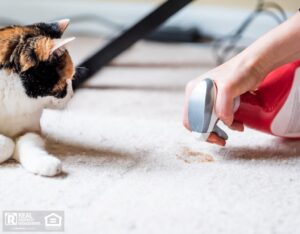
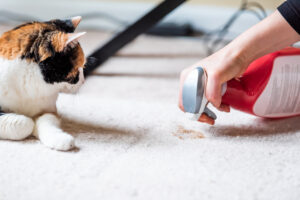
After pet-owning tenants move out, odors from their animals can linger in a rental property. It can be hard to draw in new tenants because of these odors, especially those who are sensitive to smells or don’t own pets. If a tenant lived in the property for a long time or left a significant pet-related mess, getting rid of pet odors can be especially difficult. These general tips will help you restore your rental property and remove pet odors effectively.
The Quick Science Behind Pet Odors
Pet odors are a frequent problem in rentals that permit pets. Pet urine and feces contain bacteria that break down the volatile organic compounds (VOCs) behind these odors. Help manage these odors by cleaning carpets, upholstery, and hard surfaces regularly. Odor-causing substances are broken down especially effectively by enzymatic cleaners. To help prevent persistent odors, set clear expectations for tenants and clean on a regular basis.
Methods for Removing Pet Odors from Your Rental Property
Whenever you treat carpets, upholstery, and hard surfaces, opt for cleaning products that won’t harm people or pets. Regular cleaning and maintenance are essential to prevent pet odors from becoming a persistent issue.
- Enzymatic cleaners are effective against pet odors because enzymes break down the bacteria that cause them. Use them on hard surfaces, upholstery, and carpets; they can also help remove stains left by pet urine or feces. The price may be higher than that of some other products, but the effectiveness often makes enzymatic cleaners a worthwhile investment.
- Pet odors can be eliminated with the help of baking soda and vinegar, two common household products. Baking soda is a natural odor absorber, so spread it on carpets and upholstery, wait several hours, and vacuum it up. For hard surfaces, spray a mixture of water and vinegar to disinfect naturally and neutralize odors.
- Persistent smells can be removed with the help of activated charcoal, another natural odor absorber. Distribute bowls of activated charcoal throughout the property to help absorb odors, and place them carefully so cleanup doesn’t involve spills or messes.
- Air purifiers can remove pet odors effectively by filtering out allergens and pet dander. They do, however, need regular maintenance and may mean a higher initial investment.
Keeping Your Rental Property Odor-Free
To maintain odor-free rental properties, stop pet odors from developing to begin with. Routine cleaning and maintenance can prevent pet odors from becoming a problem. Consider these steps to head off pet odors in the future:
- Give pet tenants clear guidelines. Ensure that tenants understand their responsibility for keeping the property clean and odor-free. Promote odor-control products and consistent cleanup after pets, both inside and outside.
- Regular cleaning and maintenance: Pet odors are less likely to become an issue with routine cleaning and maintenance. Regularly clean hard surfaces, carpets, and upholstery to prevent pet odor buildup, using cleaning supplies that are safe for people and pets.
- Use air purifiers: They reduce pet odors and filter out allergens like pet dander, so install them in common areas or throughout the rental property.
- Limit the number and size of pets: Your rental properties face a lower risk of odors and property damage when you set reasonable limits on the number and size of pets allowed.
Tenants’ health and a rental property’s appeal can both be harmed by pet odors. Property owners and managers are encouraged to apply effective odor removal strategies, among them air purifiers, baking soda, vinegar, enzymatic cleaners, and activated charcoal. To keep rental properties fresh and appealing to all tenants, take preventative measures like setting clear guidelines for pet tenants, cleaning regularly, and placing reasonable restrictions on pets.
If you need additional support with property management or maintaining rental properties, contact our team at Real Property Management Trailhead today.
Originally Published on February 9, 2024
This content is provided for general informational and educational purposes only and does not constitute financial, legal, tax, or investment advice. Readers should consult with licensed professionals regarding their specific circumstances.
We are pledged to the letter and spirit of U.S. policy for the achievement of equal housing opportunity throughout the Nation. See Equal Housing Opportunity Statement for more information.
